Full analysis on the New Criminal Laws Onboarding 2026 phase. Learn about CCTNS data integration, digital forensics parameters, and administrative milestones for competitive exams.
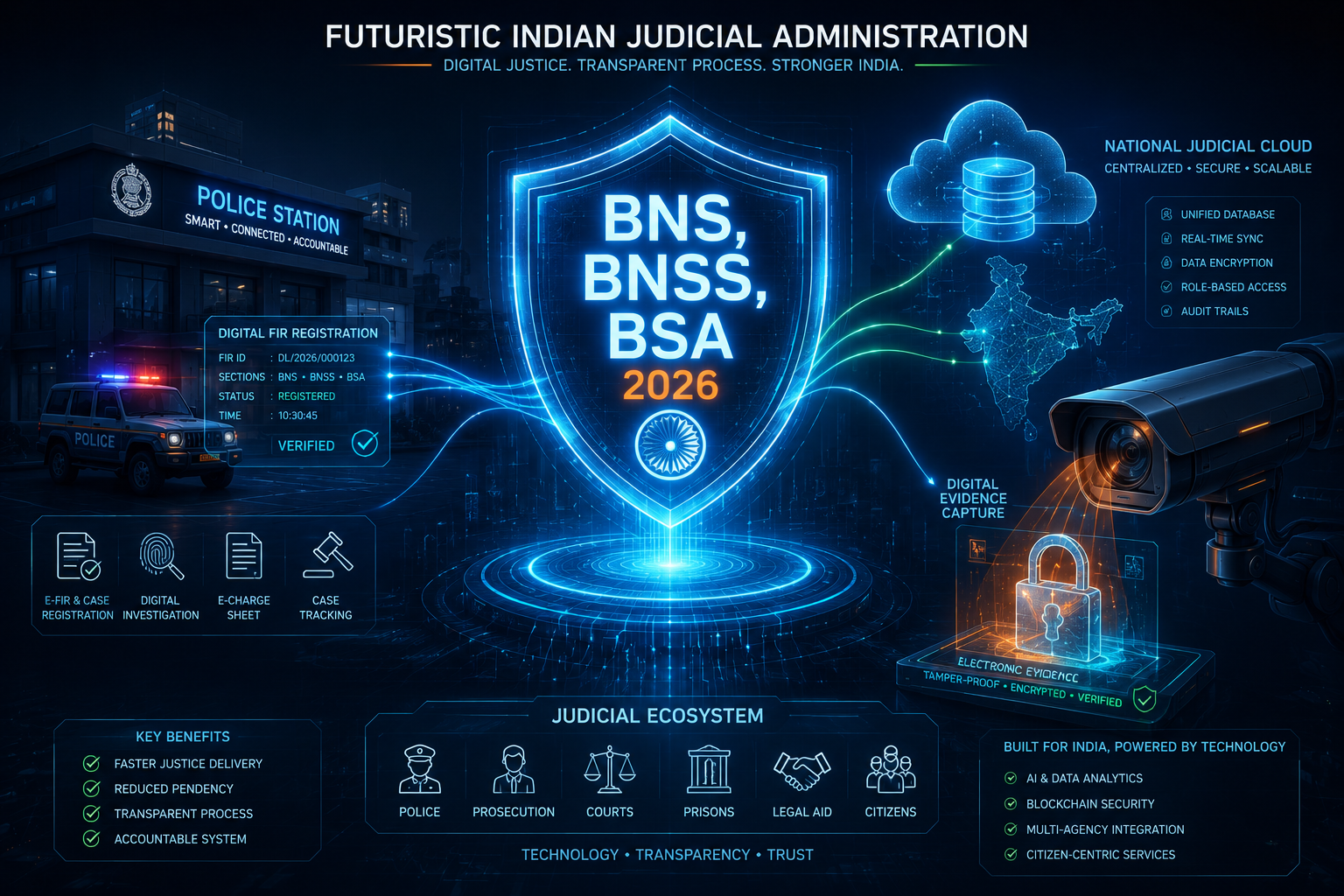
India’s structural transition towards digital judicial administration hits its final milestone under the New Criminal Laws Onboarding 2026 initiative. State law enforcement networks have officially synchronized their tracking frameworks to support the technical requirements of Bharatiya Nyaya Sanhita (BNS), Bharatiya Nagarik Suraksha Sanhita (BNSS), and Bharatiya Sakshya Adhiniyam (BSA).
100% CCTNS
Every police station portal connected to centralized criminal archives
Mandatory Video
Electronic recording mandated for entire seizure and search timelines
Fast Tribunals
Closed 90-day structural window to process legal charge sheet allocations
Zero FIR Link
Instant country-wide registration independent of territorial limitations
New Criminal Laws Onboarding 2026:Why It Matters?
Dismantling the Colonial Architecture: The core target of the New Criminal Laws Onboarding 2026 phase is to systematically eliminate outdated legal frameworks. The transition replaces old codes like the IPC 1860, CrPC 1973, and Indian Evidence Act 1872 with modern, technology-driven guidelines structured directly for swift justice delivery parameters.
Database Structural Alignment: Police technical cells have optimized the Crime and Criminal Tracking Network and Systems (CCTNS) to match the new regulatory patterns under the New Criminal Laws Onboarding 2026 roadmap, making sure electronic footprints and forensic updates are unalterable across records.
Click the system protocols below to track justice speed metrics under old vs new frameworks:
Processing Speed: 30% (Legacy Colonial Loop – Long delays in manual file processing and physical record verification loops)
New Criminal Laws Onboarding 2026:The Three Core Structural Pillars
1. Bharatiya Nyaya Sanhita (BNS) Code Alignments: BNS introduces structural modifications to traditional offense categorization, prioritizing crimes against women and children, introducing community service as a penal alternative, and classifying terrorism under structured internal security protocols as part of the execution under the New Criminal Laws Onboarding 2026 model.
2. Bharatiya Nagarik Suraksha Sanhita (BNSS) Operational Timelines: Under the New Criminal Laws Onboarding 2026 layout, BNSS enforces strict time-bound rules. Medical checkups, investigation reporting, and layout updates must follow absolute timelines, ensuring no unnecessary administrative delays occur.
3. Bharatiya Sakshya Adhiniyam (BSA) Digital Integrity: BSA legalizes electronic data components completely. Smartphone footage, email server files, and database records are treated as primary evidence metrics, provided their electronic validation loops remain clean and tamper-proof.
Structural Security Overhauls:What Changes for You?
The operational architecture under the New Criminal Laws Onboarding 2026 roadmap implements massive administrative shifts across four primary sectors:
1. Centralized Forensic Integration
Mandates specialized forensic team presence across severe crime scenes to gather clean data evidence blocks systematically under the New Criminal Laws Onboarding 2026 mandate.
2. Zero-FIR Freedom Loop
Allows citizens to register a complaint at any police desk across the country, completely eliminating local jurisdictional disputes.
3. Auditable Electronic Searches
Enforces mandatory electronic video logging during all property searches and seizures to eliminate structural corruption loops.
4. Tech-Driven E-Summons
Introduces secure digital notifications for judicial summons, accelerating procedural timelines for law enforcement networks.
✨ DEFENCERA LAW & INTERNAL SECURITY CHALLENGE (ALL EXAMS PREP)
Question: Under the dynamic framework of the New Criminal Laws Onboarding 2026 layout, which old legal asset does the Bharatiya Sakshya Adhiniyam (BSA) substitute completely?
A) Code of Criminal Procedure 1973
B) Indian Evidence Act 1872
C) Indian Penal Code 1860
Correct Answer: B (Indian Evidence Act 1872)! Explanation: The Bharatiya Sakshya Adhiniyam (BSA) completely replaces the Indian Evidence Act 1872, legalizing electronic logs as primary evidence under the New Criminal Laws Onboarding 2026 milestones. This remains a highly critical exam question across formats.
High-Yield Administrative DataEssential Law Grid
Direct study indicators mapping the operational pillars of the New Criminal Laws Onboarding 2026 phase for interviews and tests:
Core Reform Strategy
New Criminal Laws Onboarding 2026 (BNS, BNSS, BSA Systems Onboarding).
Central Integration Engine
National Crime Records Bureau (NCRB) cloud data storage and CCTNS network updates.
Digital Forensics Mandate
Compulsory for crimes carrying penalties of 7 years or more to secure database evidentiary lines under the New Criminal Laws Onboarding 2026 layout.
Judicial Efficiency Target
Mandatory delivery of final verdicts within 30 days after court arguments close.
Victim Protection Clause
Mandatory progress feedback channels giving updating loops directly to citizens within 90 days.
Logistical Obstacles &The Path Forward
Deploying a completely technology-integrated criminal database structure under the guidelines of the New Criminal Laws Onboarding 2026 framework creates significant ground-level pressures:
STRATEGIC JUDICIAL DIGITAL TELEMETRY BLUEPRINT
1. Country-Wide Training Demands: Training millions of police officers and judicial administrative staff down to the village level on new operational platforms.
2. Forensic Infrastructure Gaps: Upgrading district-level laboratory testing setups to guarantee faster analysis metrics for legal evaluation protocols.
3. Cloud Encryption Standards: Ensuring massive citizen information banks and electronic statement logs stay secured against unauthorized data breaches.
Defencera Final Strategic Take: Modern sovereign leverage is built on the speed and fairness of its justice delivery mechanisms. The New Criminal Laws Onboarding 2026 phase marks a historic shift for India, moving from colonial-era legal controls to a citizen-centric, technology-driven security matrix.
JOIN THE ELITEINTELLIGENCE NETWORK
Do not settle for generic current affairs. Gain access to deep, structured breakdowns and defence intelligence updates designed to give you an analytical edge in your examinations.
 Join WhatsApp Channel
 Join Telegram Channel